
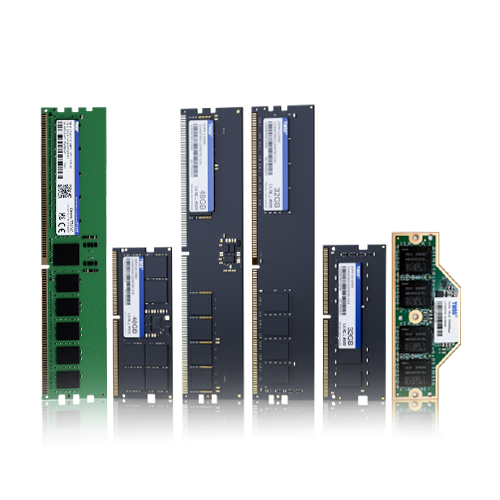



As AI PCs and high-performance computing applications accelerate, and as the parameter scale of on-device large models continues to grow, next-generation CPU platforms place substantially higher demands on memory bandwidth and signal stability. TWSC has officially introduced its DDR5 memory module series built on Clock Driver (CKD) technology, meeting the greater bandwidth and stability requirements imposed by AI workloads.
01 CKD technology improves signal integrity, supporting 7,200 MT/s
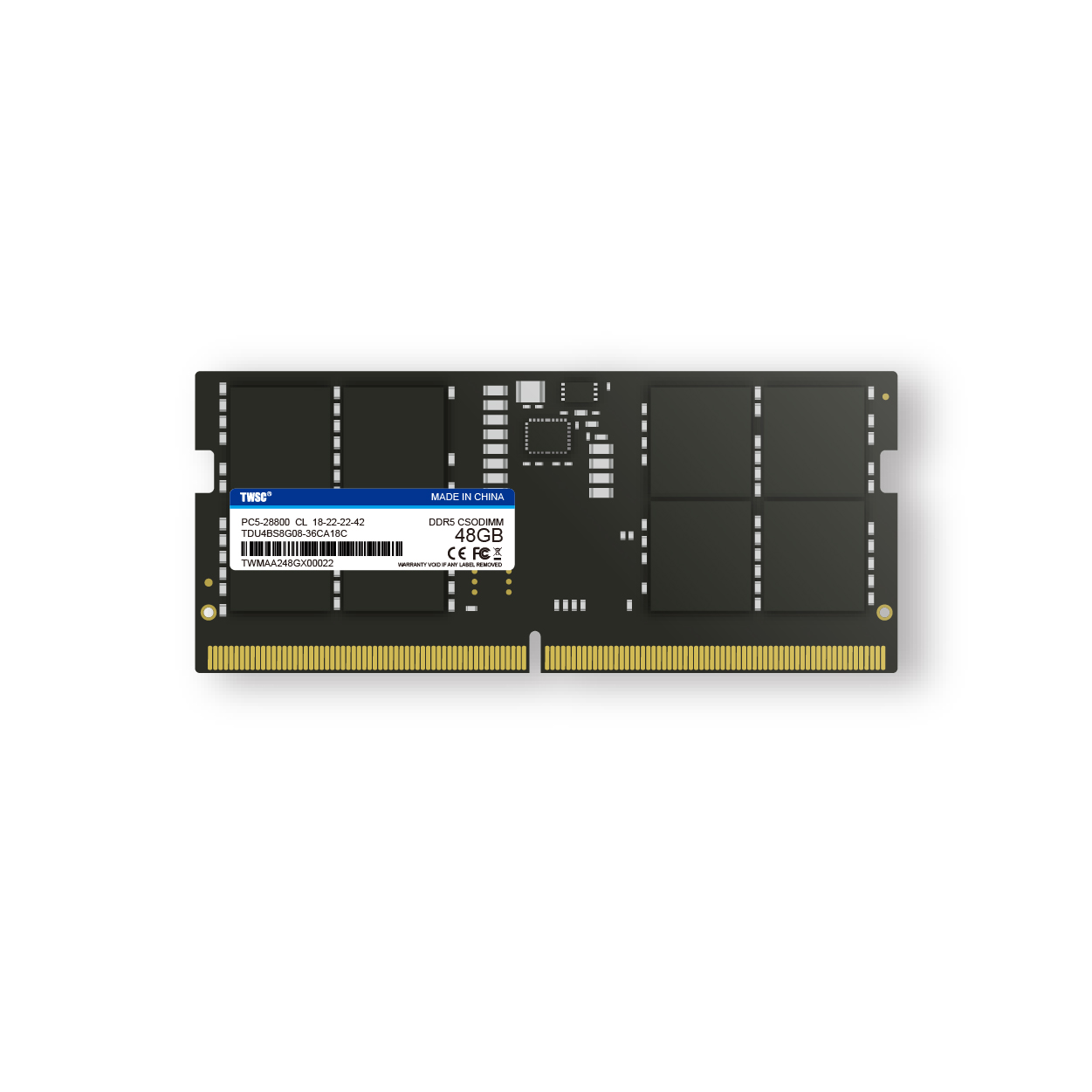
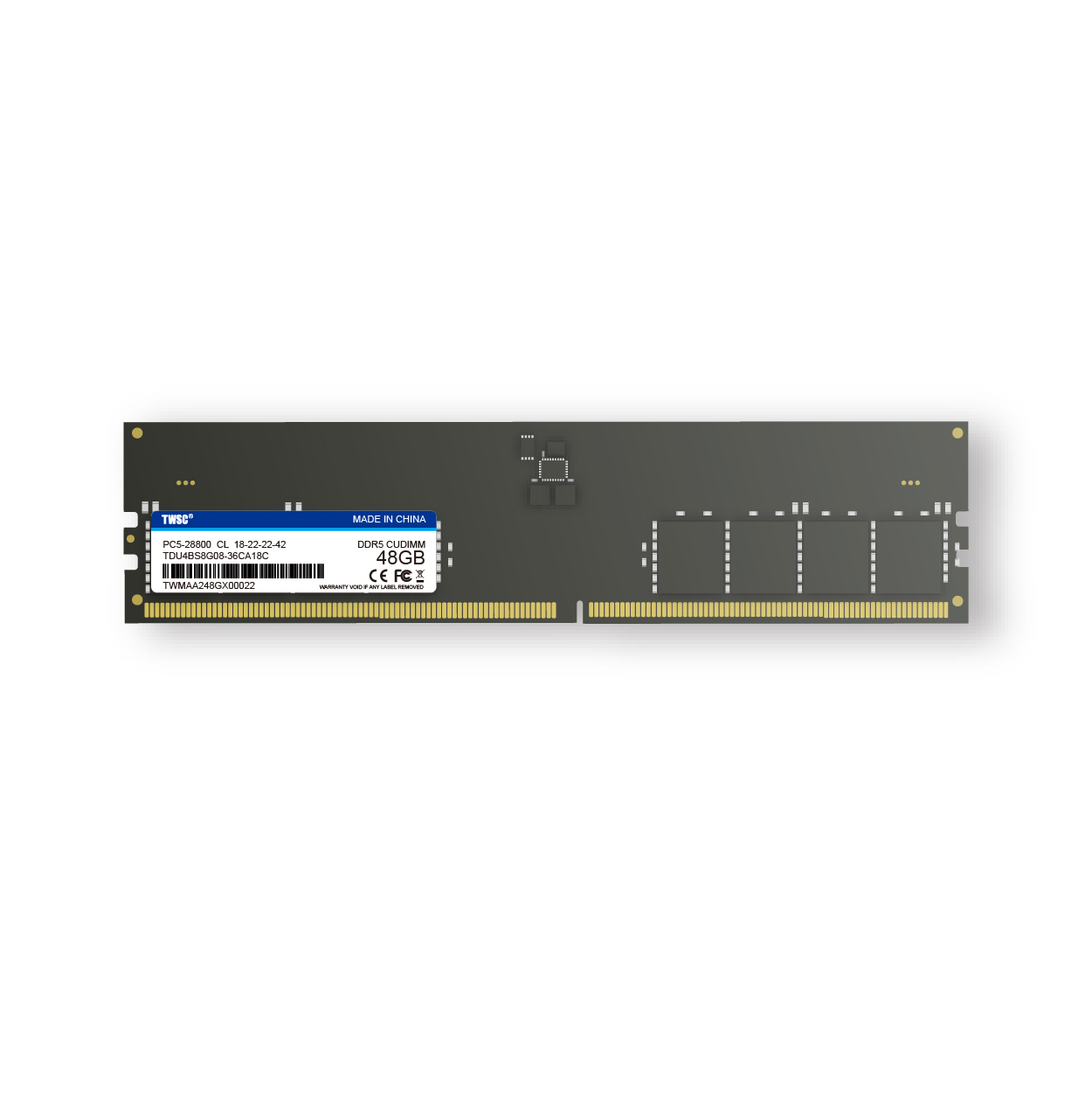
The series supports the CUDIMM and CSODIMM form factors, complies with JEDEC standards, and operates at speeds up to 7,200 MT/s. It adopts a dual 32-bit independent channel design to deliver 64-bit parallel bandwidth, covers capacities from 16 GB to 64 GB, and is fully compatible with next-generation processors, ensuring platform compatibility.
When pushing performance, conventional DDR5 commonly encounters signal integrity challenges at high speeds. TWSC's DDR5 CKD memory modules innovatively integrate an independent clock driver on the module, optimizing the signal transmission path between the memory and the CPU controller, effectively reducing jitter and interference at high speeds, and thereby improving system stability.图
02 Integrated ODECC and PMIC strengthen data reliability and power efficiency
The TWSC CKD DDR5 memory module series supports ODECC (On-Die Error Correction Code), which detects and corrects data errors in real time inside the chip, significantly enhancing data integrity.
In addition, the built-in Power Management IC (PMIC) delivers precise voltage regulation, improving power efficiency while further consolidating operating stability at high speeds.图
03 Rigorously selected DRAM dies and a stable design ensure reliable high-speed operation
Through stringent DRAM die selection and stability verification, the product ensures that core components perform under heavy workloads. Combined with an optimized PCB stack-up design and signal path planning, transmission loss and signal interference are effectively controlled, sustaining stable high-speed memory operation.图